
About the Book
BOOK INTRODUCTION
This is Not Just a Book. It’s a Shield.
Unmasking Deceit is a practical, story-driven guide to modern scams, cybercrime, and consumer deception. It reveals how fraud works, why it is so effective, and what readers can do to protect themselves and the people they care about becoming the next victim.
Written by a former banking professional with sixteen years of frontline experience, this book speaks to readers with clarity and understanding. It meets you where you are, in the middle of an ordinary day, when an extraordinary threat could be closer than you think.
Buy Now on AmazonBuy on WaterstonesBuy on Barnes & Noble
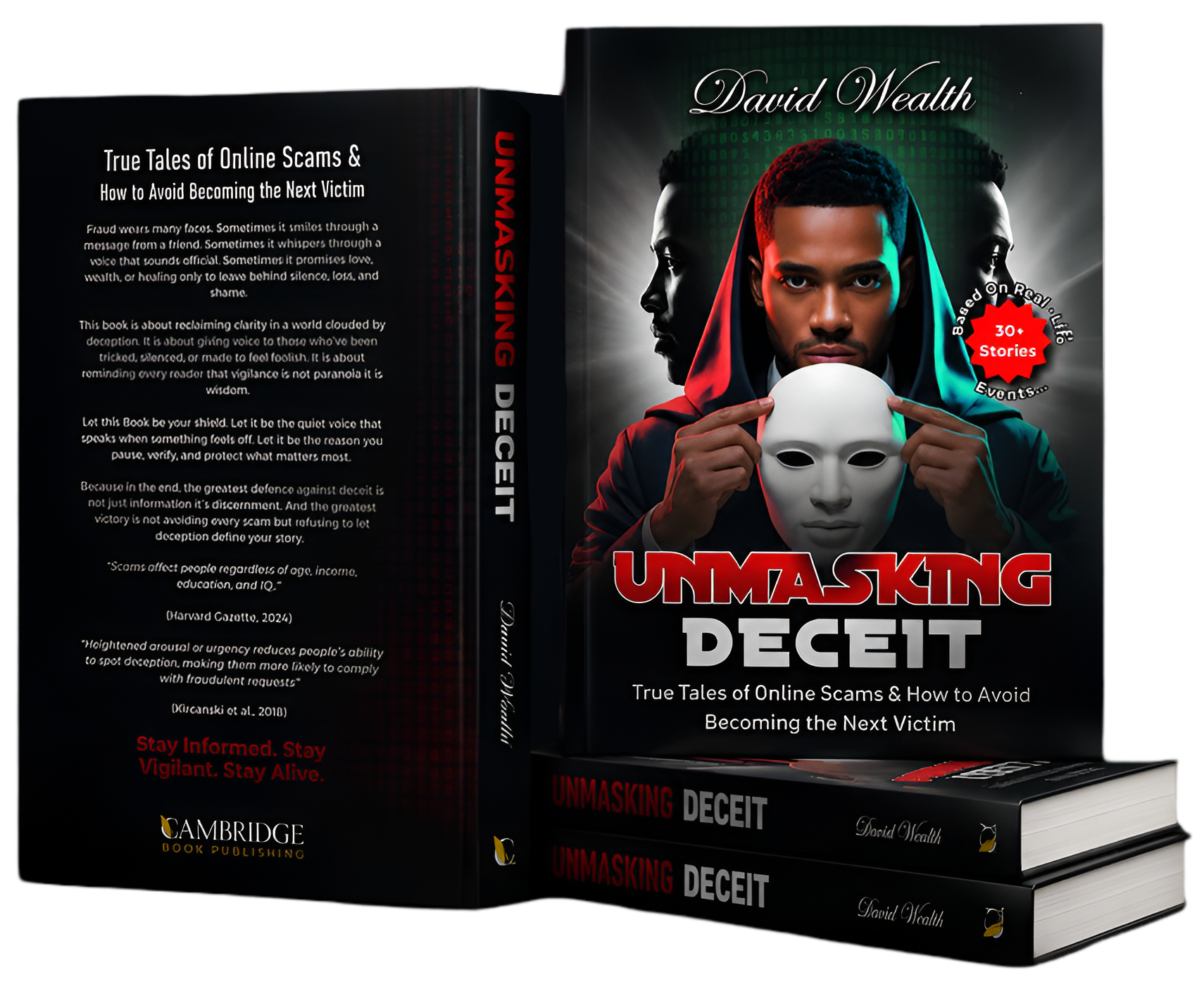
WHAT THIS BOOK COVERS
Thirty-Plus Case Studies. Seven Parts. One Mission.
Unmasking Deceit is structured into seven parts, each exposing a different domain of modern fraud — from the psychology of manipulation to real estate scams, healthcare fraud, and everyday deceptions targeting ordinary people:
Part 1
The Psychology of Deception — Why smart people get hooked and how fraudsters manipulate emotion, urgency, and trust.
Part 2
Digital Scams & Identity Theft — From phishing and SIM swap fraud to business email compromise and card-not-present crime.
Part 3
Romance & Emotional Scams — When love becomes a weapon: the emotional and financial cost of manufactured intimacy.
Part 4
Investment & Crypto Scams — The illusion of wealth: Ponzi schemes, fake crypto platforms, and WhatsApp investment traps.
Part 5
Real Estate Scams — When homes are stolen on paper: deposit fraud, title theft, and deepfake property brokers.
Part 6
Healthcare & Insurance Fraud — Ghost clinics, counterfeit pharmaceuticals, and medical identity theft.
Part 7
Everyday Deception — Delivery scams, lottery fraud, pyramid schemes, and social media impersonation.
KEY FEATURES
What Makes This Book Different
- 30+ powerful case studies drawn from documented, real-world fraud tactics worldwide
- Modern fraud coverage: phishing, deepfakes, AI voice cloning, crypto scams, and more
- Clear protection insights from trusted institutions, including the FTC, FBI, and UK Action Fraud
- Human-centred perspective: victims are never blamed; their stories are told with dignity and truth
- Recognise warning signs early, before you click, transfer, or respond
- Avoid everyday scams before they strike practical, actionable defence for every reader
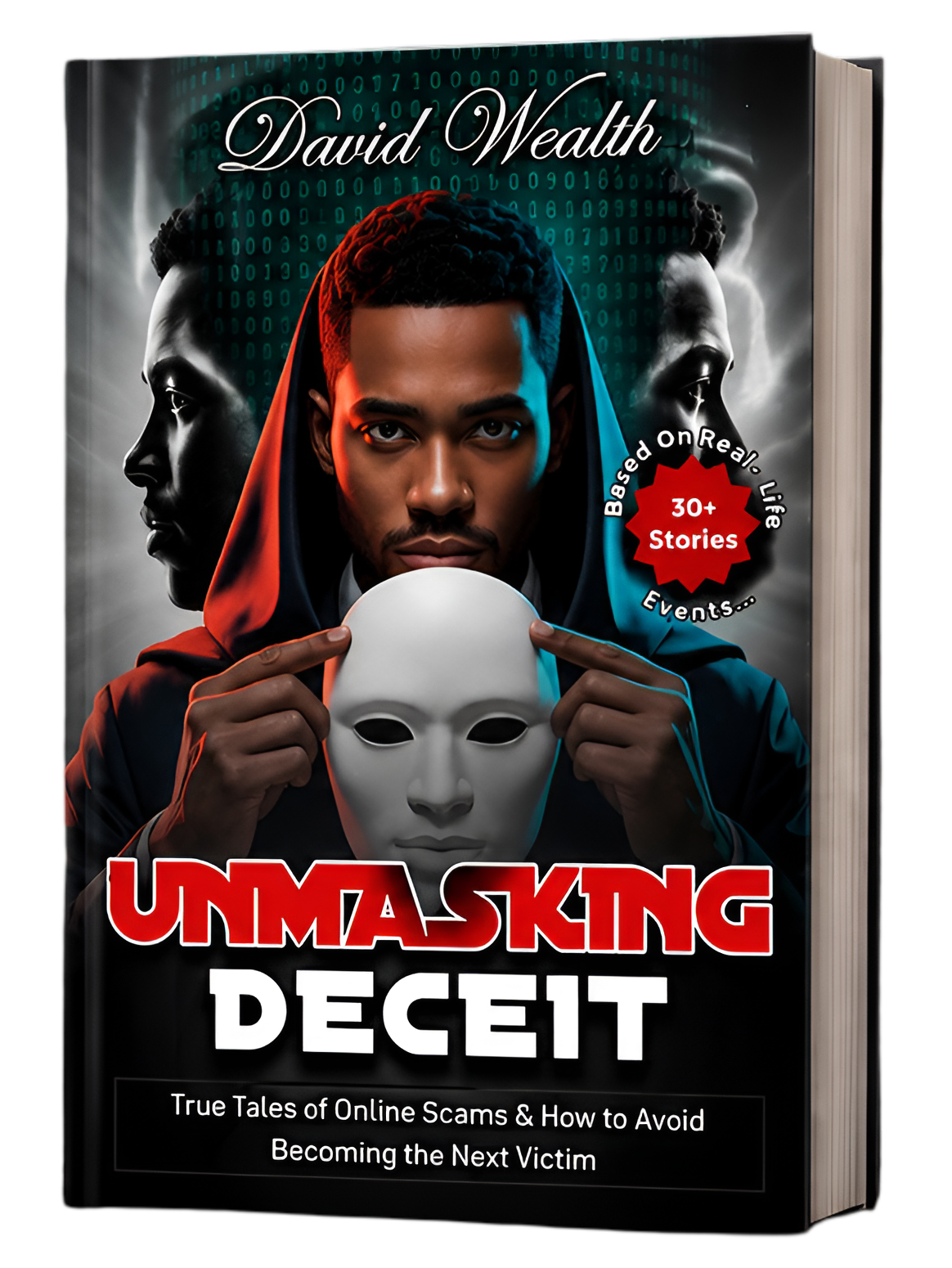
WHY THIS BOOK MATTERS
The Scale of the Problem
$10.3B
Annual losses from internet-enabled crime reported in 2022 (FBI IC3)
74%
Of data breaches involve a human element — social engineering, not just technology
Millions
Of people worldwide targeted by identity theft each year across all age groups and income levels
AVAILABLE ON
Buy Unmasking Deceit
Available in print and digital formats at all major booksellers:
Waterstones
Amazon
Blackwell’s
Foyles
Adlibris
Barnes & Noble
PRACTICAL & PROTECTIVE
Both. Every chapter combines narrative storytelling the kind that draws you in and makes the psychology of fraud viscerally clear with practical, step-by-step advice. Each section ends with specific actions: what to check, what to report, which organisations to contact, and what red flags to watch for. The book is written to be genuinely useful, not just informative.
Can this book help protect my parents or elderly relatives?
Yes in fact, protecting older adults is one of the book’s core purposes. Fraud disproportionately targets older people, particularly through phone-based scams (vishing), tech support fraud, romance scams, and inheritance tricks. David has written the book in accessible, jargon-free language, making it easy to read aloud, share, and discuss with older family members. Several readers have gifted the book specifically for this purpose.
Is the book relevant outside the UK?
Absolutely. While David is based in the United Kingdom, the fraud tactics covered are global. The book features case studies from Nigeria, Germany, Austria, South Africa, Mexico, Australia, Japan, Brazil, and more. The psychological principles behind scams are universal they exploit human nature, not national borders. References are included from the FBI, FTC, Europol, Interpol, and multiple international consumer protection agencies.
Buy the BookContact David