
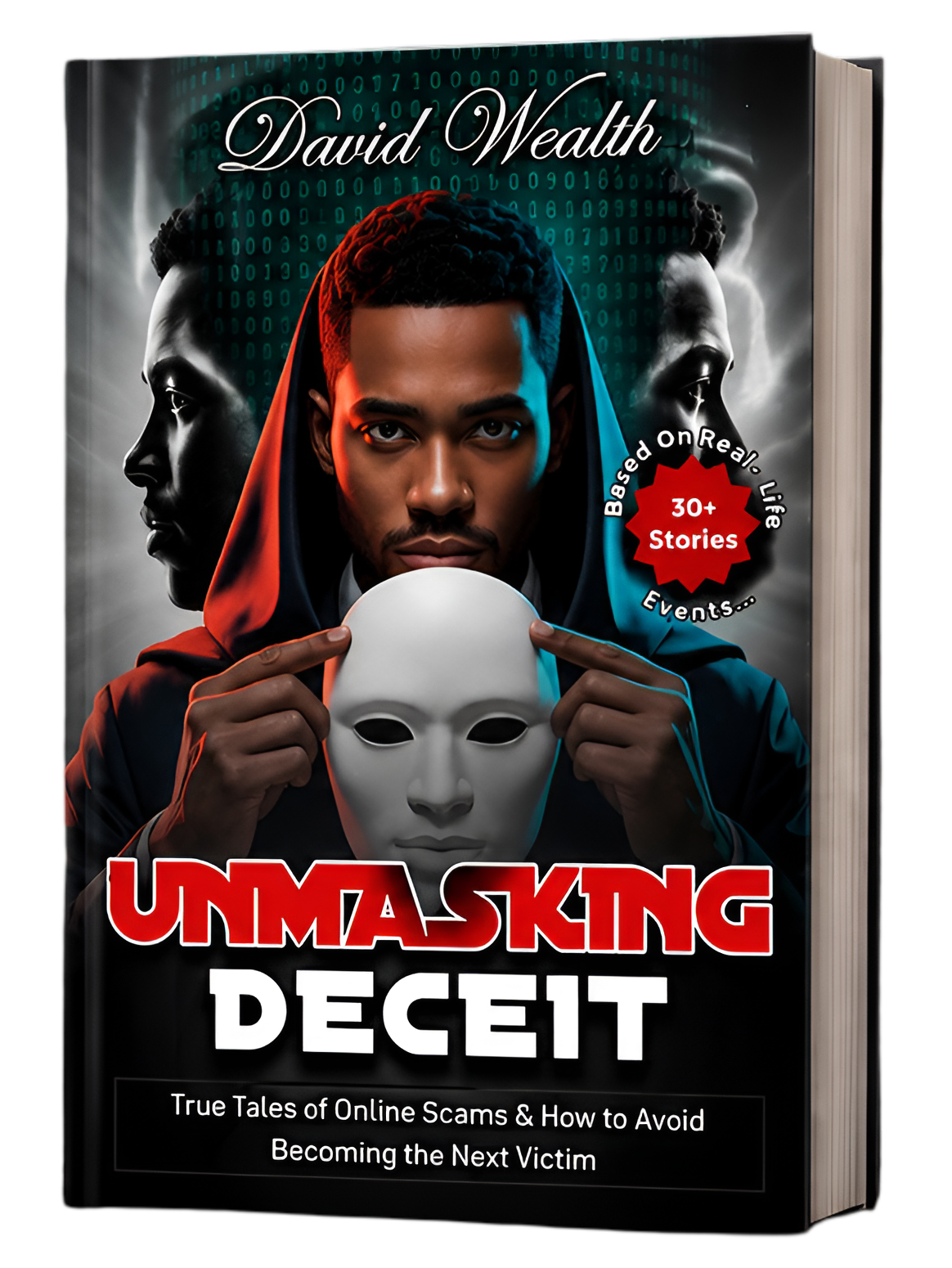
UNMASKING
DECEIT
The most dangerous scams are often the ones that feel the most believable. A parent hears a familiar voice. A retiree obeys what sounds like an authority figure. A family clicks a link that seems routine. An investor trusts a group that looks legitimate. The book reveals the mechanics of deception so its power can be broken.
EXPLORE THE BOOKABOUT THE AUTHOR
AVAILABLE ON:








About The Author
DAVID WEALTH
Cybersecurity awareness advocate and author passionate about exposing online deception and empowering people through knowledge. His mission is simple: to help you stay informed, protect yourself, and take back control in today’s digital world.
READ MORE


TOPICS COVERED
DAVID WEALTH
- 30 plus powerful case studies
- Modern Fraud Coverage
- Clear Protection Insights from Trusted Institutions
- Human‑Centred Perspective
- Recognize Warning Signs Early
- Avoid Everyday Scams Before They Strike
Hear the Author
REVIEWS

” A groundbreaking book by David Wealth, blending real‑world fraud cases, expert insights, and gripping storytelling to expose the tactics scammers don’t want you to know.”
Cambridge Book Publishers
“Finally, a fraud book that speaks to real people, not just experts.”
Community Review
“Every chapter felt like watching someone fall into a trap in slow motion. And then I realised… it could’ve been me.”
Public-sector Professional, UK
“This book doesn’t just teach, it shakes you awake
Early Reader, UK
WHY THIS BOOK MATTERS
01
Cybercrime is projected to cost the global economy approximately $10.5 trillion annually, making it one of the fastest-growing criminal industries in the world (Cybersecurity Ventures, 2025)
02
AI-enabled fraud is expanding rapidly, with criminals increasingly using deepfakes, voice cloning, and generative AI to automate scams at scale. Pindrop reported a 680% year-over-year increase in deepfake activity during 2024 (Pindrop, 2025).
03
Identity theft affects millions of people worldwide each year, with stolen personal information used to commit financial fraud, open fraudulent accounts, obtain loans, and impersonate victims across borders (Dennis, 2026; Radin, 2026)
Frequently Asked Questions
Can scams really happen to people like me?
Absolutely. One of the biggest lessons from Unmasking Deceit is that scammers don’t target stupidity, they target trust, emotions, routine, and timing. The book is filled with victims who were teachers, bankers, business professionals, parents, retirees, and even cyber-aware individuals. They weren’t careless; they were human. What trapped them wasn’t a lack of intelligence, it was a carefully crafted lie.
What's the biggest scam mistake most victims make?
Believing, “This could never happen to me.”
Almost every victim in the book ignored a small feeling of doubt because the message looked legitimate, the caller sounded convincing, or the opportunity seemed genuine. The biggest mistake isn’t being naïve, it’s acting before verifying. Scammers win when they create urgency and stop you from pausing to think.
Am I truly scam-proof or have I just been lucky so far?
That’s the question this book forces you to confront.
Many victims had gone decades without being scammed. Then one phone call, one email, one WhatsApp message, or one investment opportunity changed everything. Being scam-free doesn’t always mean you’re scam-proof; sometimes it simply means the right scammer hasn’t found the right angle yet.
If a scammer studied my social media, habits, and lifestyle for 30 days, would I stand a chance?
Most people would be surprised by how much information they already reveal.
The book shows how scammers use Facebook posts, LinkedIn profiles, family photos, business information, hobbies, and personal routines to build trust and create highly personalised attacks. The real danger is that when a scammer knows enough about you, the scam no longer feels like a scam, it feels like a normal conversation.
If I've never been scammed before, is this book still for me?
Especially for you.
The best time to learn about deception is before you become a victim. The people in these stories all wished they had known what they were up against before the lie began. This book isn’t just for people who have been scammed, it’s for people who don’t want to be.
One Final Thought
Scammers only need to be right once. You need to be prepared every time. That’s why this book matters.
Stay Informed. Stay Vigilant. Stay Ahead.
Join the community and get valuable insights, safety tips, and book updates straight to your inbox.